

Sunny Park: "History Remembers Gratitude Only When It Becomes Action"
Wall of Remembrance to Bear More Than 47,000 Names, With Dedication Targeted for July 2029
"Gratitude that remains only in our hearts will not become part of history. We must express it through action."
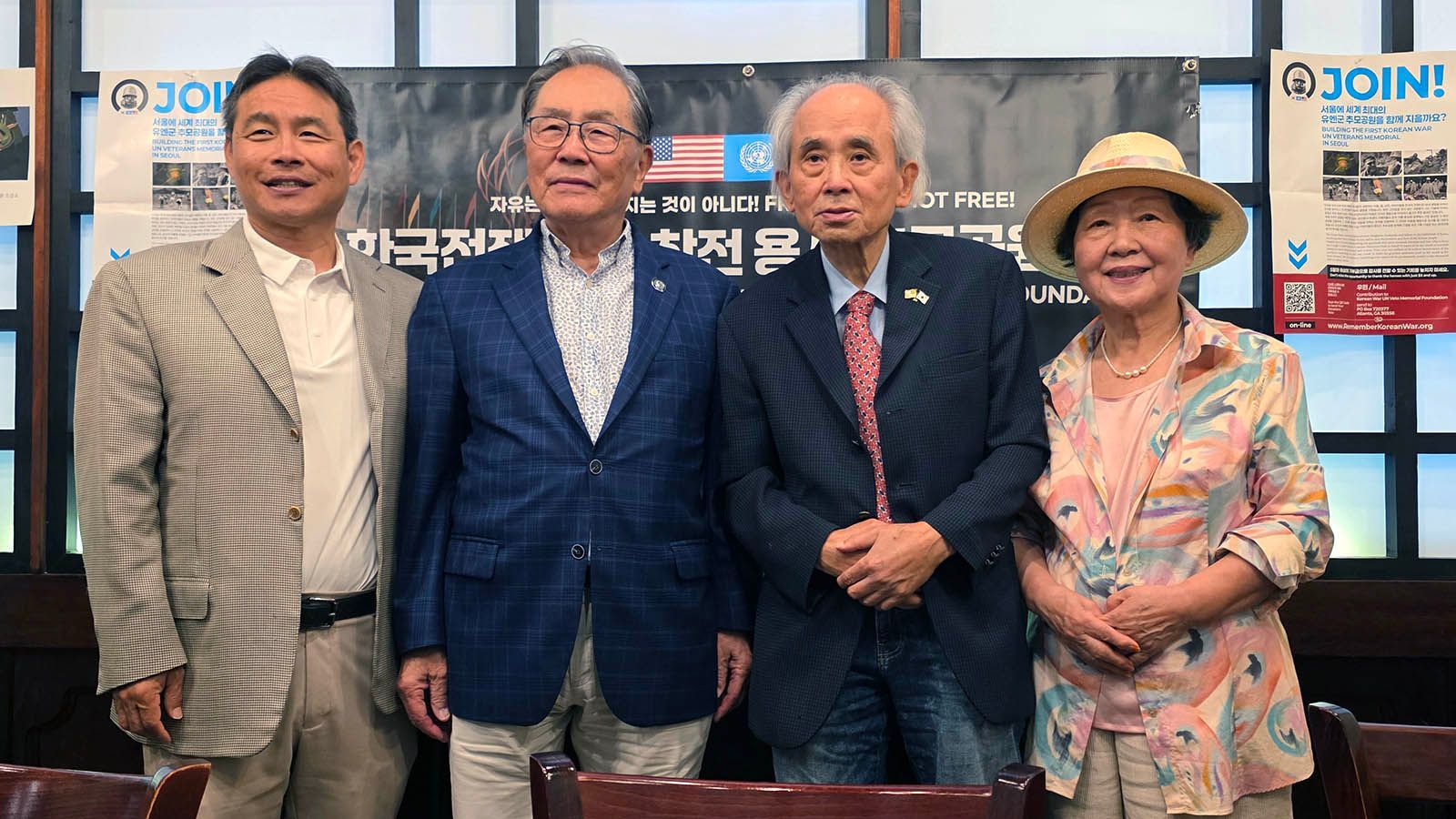
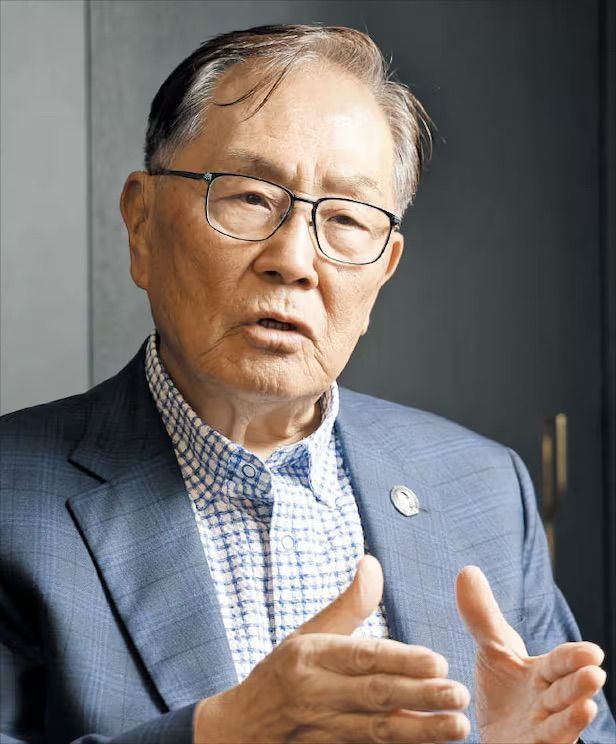
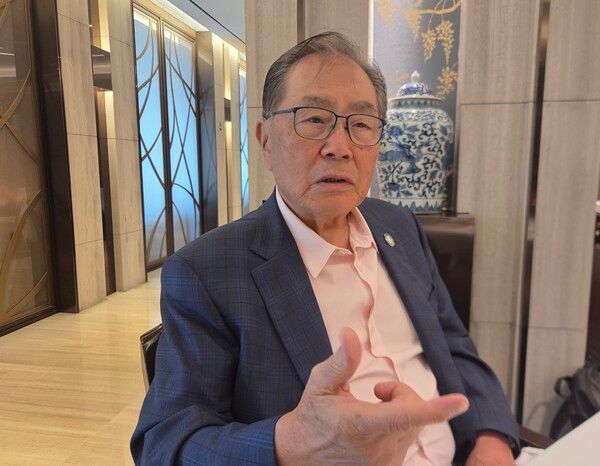
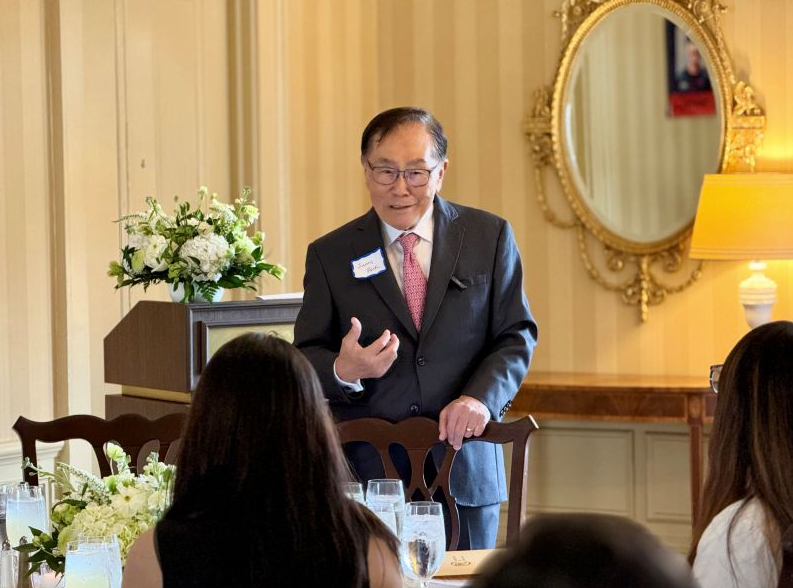
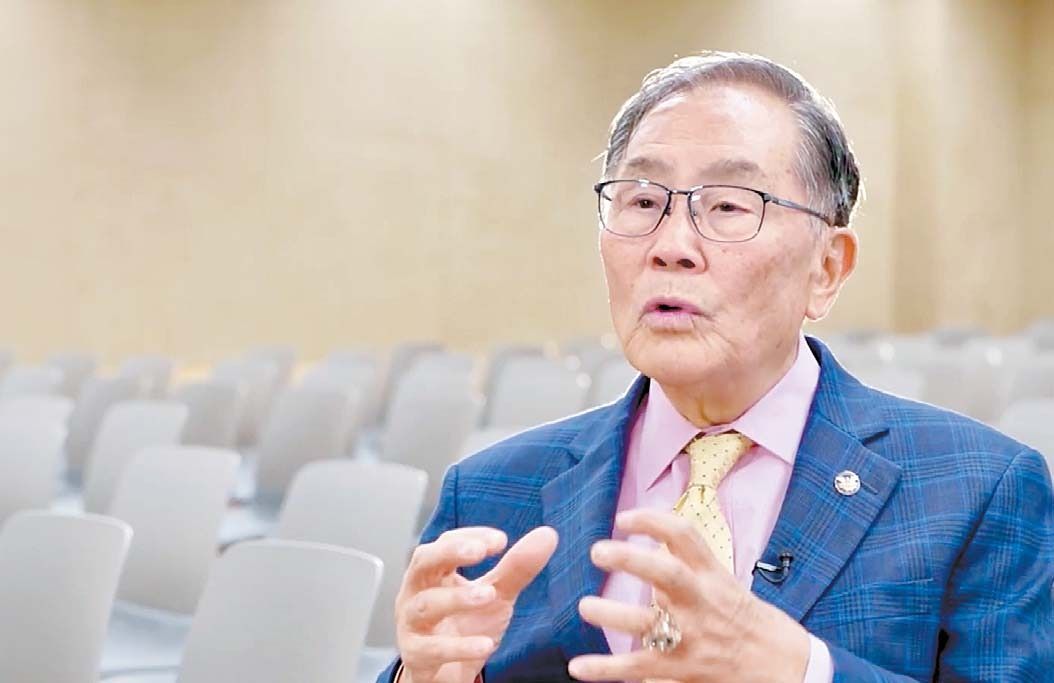
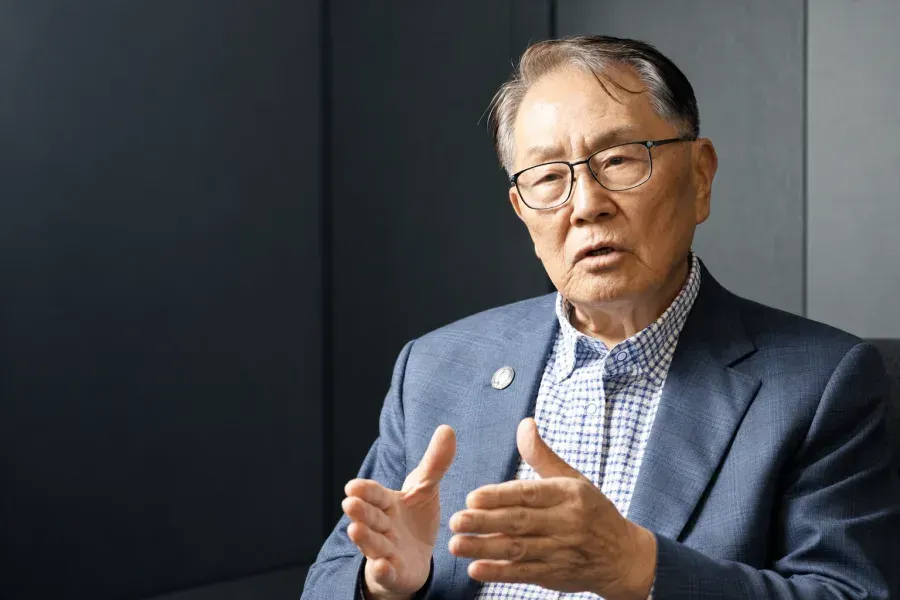
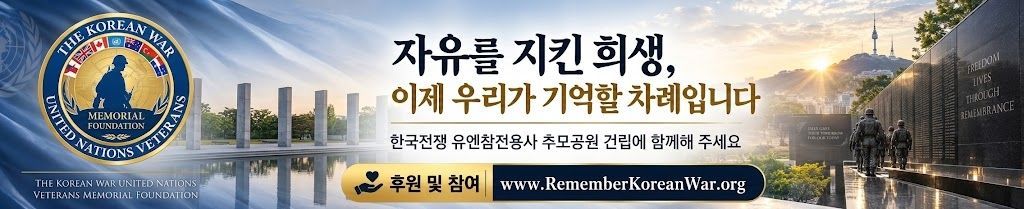
Sunny Park, president of the American Korean Friendship Society and a longtime Atlanta businessman, is leading an effort to build a major memorial in Seoul honoring the United Nations troops who gave their lives during the Korean War.
The project, led by the Korean War United Nations Veterans Memorial Foundation, is expected to cost approximately $38 million. But Park said its significance should not be measured by its price tag or physical scale.
His vision is to have one million people in South Korea and throughout the Korean diaspora make donations—even modest ones—and personally participate in preserving the memory of those who defended Korea.
"It might be faster and easier to have a few corporations make large contributions," Park said. "But if one million people each contribute $10 or 10,000 won, the memorial will carry the spirit of the Korean people. It will show the world that Korea is a nation that remembers those to whom it owes a debt of gratitude."
The War Through the Eyes of an Eight-Year-Old
Park's decades-long commitment to Korean War veterans began with memories he has carried since he was eight years old.
While fleeing from Wangsimni in Seoul toward Busan during the war, he saw the bodies of young foreign soldiers lying along roads and in rice fields.
At the time, he did not know who they were or why they had traveled to a country unfamiliar to them only to lose their lives. As he grew older and learned more about the war, he came to understand what he had witnessed.
"They did not die defending their own country," Park said. "They died defending the freedom of people in the Republic of Korea whom they had never met. Having witnessed their sacrifice, I carried a conviction that someday I must repay that debt."
That memory stayed with him after he immigrated to the United States and built his career in business.
Park went on to support veterans' appreciation events, memorial projects in Georgia and the Korean War Veterans Memorial in Washington, D.C. Yet every time he accompanied American veterans to South Korea, he felt that something essential was missing.
There is no prominent memorial in Seoul devoted specifically to the sacrifice of the U.N. forces.
The United Nations Memorial Cemetery in Busan is a burial ground established and administered under U.N. auspices, while the War Memorial of Korea in Seoul covers the nation's broader military history. Park believes a country that has emerged as a global economic and cultural power must now create a national space dedicated to honoring the U.N. troops who helped preserve its freedom.
"I have always felt ashamed that Seoul does not have a representative memorial honoring the U.N. forces that defended South Korea," he said. "This is something we must accomplish before the generation that personally experienced the war is gone."
More Than 47,000 Names in One Place
At the center of the proposed memorial will be a Wall of Remembrance bearing the names of more than 47,000 fallen U.N. troops, including approximately 7,000 Korean Augmentation Troops to the United States Army, commonly known as KATUSA. The KATUSA names are being added at the request of American veterans.
The memorial complex would also feature sculptures representing the participating nations, an eternal flame, nighttime illumination, an exhibition hall and an educational center.
Park said the project should be more than a solemn monument. It should become a place where families and younger generations can naturally encounter the history of the Korean War and learn about the price of freedom.
"Young people should not have to make a special effort just to visit it," Park said. "It should be a living educational space where families can walk, take photographs and naturally learn how the freedom they enjoy today was defended."
The proposed memorial draws inspiration from the Korean War Veterans Memorial in Washington, D.C., but would expand its scope to honor the entire U.N. coalition that came to South Korea's defense.
"This memorial will commemorate the past, but it is really being created for the future," Park said. "The next generation must understand that freedom is not given freely. It is protected through someone's sacrifice."
Yongsan Park Considered a Leading Site
The foundation is seeking a site of about 4,000 pyeong (3.3 acres) in central Seoul.
Although a final location has not been selected, Park considers Yongsan Park the most historically meaningful and accessible option. The area was home to the United Nations Command and U.S. Forces Korea for more than seven decades.
Other suggested locations include an area near the planned Lee Kun-hee Museum and the green plaza in Jongno District, land near Seoul National Cemetery in Dongjak District and a site near Ttukseom in Seongdong District.
"Just as the Korean War Veterans Memorial is located in the heart of Washington, D.C., this memorial should be placed where Seoul residents and international visitors can easily reach it," Park said. "We hope the Korean government will recognize its historic importance and designate a truly symbolic site."
The foundation hopes to dedicate the memorial to the Republic of Korea on July 27, 2029—the anniversary of the Korean War Armistice Agreement and South Korea's official U.N. Forces Participation Day.
After the dedication, the memorial would be operated and maintained by the South Korean government.
Organizers estimate that the memorial could attract approximately 4 million visitors during its first year and about 3 million annually thereafter.
"One Million Donors Will Be the Memorial"
The campaign to raise the projected $38 million construction cost is also taking an unconventional approach.
Rather than relying primarily on government funding or a small number of large corporate donors, the foundation is seeking participation from one million individuals in South Korea and Korean communities abroad. In the United States, the campaign aims to attract 200,000 Korean American donors.
The name of every donor will be preserved in a searchable database, allowing participants and their descendants to find a lasting record of their involvement.
Park especially hopes parents will make contributions in the names of their young children.
"If a five-year-old child makes a donation today, that child could return 30 years from now with their own children and find that name," he said. "The child could say, 'Our family helped build this memorial.' There could be no more meaningful history lesson."
Park stressed that participation matters more than the amount contributed.
"Ten dollars is enough. Ten thousand won is enough," he said. "What matters is not whether the donation is large or small. What matters is that people finally have an opportunity to express their gratitude. If one million acts of generosity come together, the result will be the greatest monument to the dignity of the Korean people."
From an Idea to an International Project
The memorial initiative has moved beyond the conceptual stage and is developing into a joint project in South Korea and the United States.
On March 3, 2026, the U.S.-based foundation signed a formal agreement in Washington, D.C., with its South Korean partner organization, which is chaired by Younghoon Lee, senior pastor of Yoido Full Gospel Church. Korea Zinc Executive Chairman Choi Yun-birm is also taking part, along with figures from the religious, legal, business, diplomatic and architectural communities.
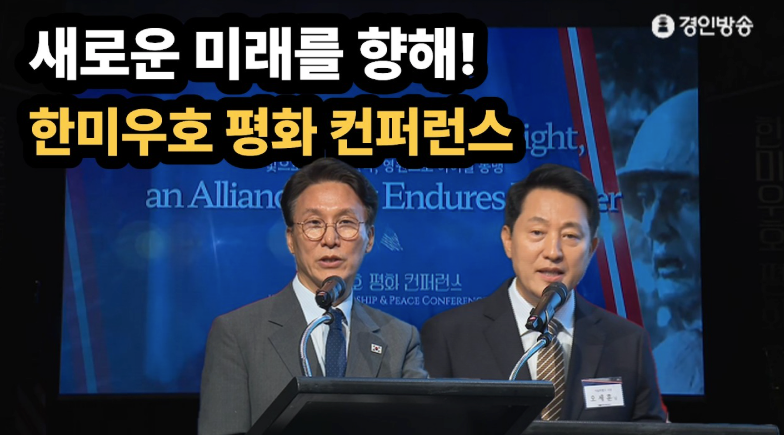
On June 20, 2026, the Korean-American Friendship Peace Concert supporting the memorial project filled all 2,505 seats at the Seoul Arts Center. A Korean-American friendship and peace dinner followed the next day.
The foundation said the events demonstrated strong public interest in the memorial and the potential for broad participation across political and social lines.
Park emphasized that the project should not be interpreted through the lens of partisan politics.
"This is not a conservative or progressive issue," he said. "It is about remembering what happened 75 years ago and repaying those who sacrificed themselves to defend the freedom of the Republic of Korea. No one can deny the historical contribution made by the United States and the other U.N. nations."
Thirty Years of Saying "Thank You America"
The proposed memorial is not the beginning of Park's efforts to honor Korean War veterans.
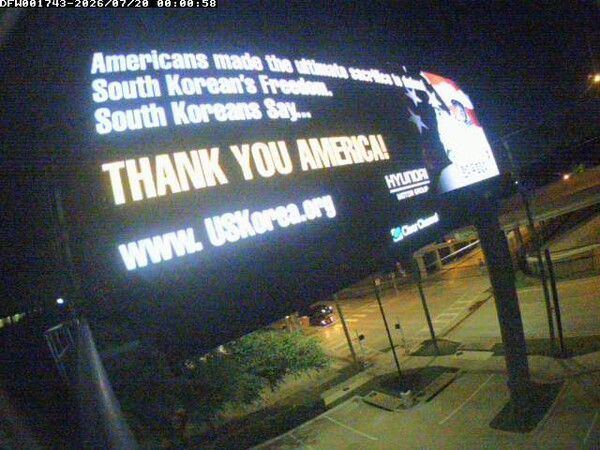
Since 1996, he has sponsored "Thank You America" billboards along major highways around the anniversary of the Korean War Armistice Agreement on July 27.
Now in its 30th year, the campaign has placed billboards in Atlanta, New York, Chicago, Dallas, Houston and Los Angeles. The billboards reach an estimated 1.5 million motorists a day across the six cities, carrying a simple message: South Korea has not forgotten the sacrifice of American service members.
Park has personally funded much of the campaign.
He said he could not stop after watching veterans break down in tears, simply because Koreans still remembered them.
"The veterans do not ask to be treated like heroes, and they do not ask for compensation," Park said. "They are deeply moved simply because their sacrifice is remembered. The words 'Thank you—we have not forgotten you' can be the greatest gift we offer them."
"The Alliance Is Rooted in Sacrifice"
Park also expressed concern that the U.S.-South Korea relationship is increasingly discussed only in terms of defense costs, trade and strategic interests.
The alliance, he said, is not merely a diplomatic arrangement or a transactional relationship. It was forged through the sacrifice of tens of thousands of young Americans who fought to preserve South Korea's freedom.
"An alliance grows weaker when gratitude disappears," Park said. "If South Korea remembers the veterans' sacrifice at the national level, the American people will continue to recognize Korea as a true friend."
"The memorial will repay a debt from the past, but it will also strengthen the U.S.-South Korea alliance for the future."
For Park, the U.N. veterans memorial is not simply another construction project. It is where the young foreign soldiers he saw lying in the rice fields will finally meet the gratitude of one million Koreans.
He believes the project's ultimate success will be determined not only by whether the memorial is completed, but by how many people choose to become part of it.
"As our generation passes a free and prosperous Republic of Korea to the next, there is something else we must pass down," Park said. "We must tell them to whom we owe this freedom and how we chose to remember that debt."
"Now is our opportunity to turn gratitude into action."
Donations can be made online at www.rememberkoreanwar.org.
Checks should be made payable to Korean War UN Vets Memorial Foundation and mailed to:
Korean War UN Vets Memorial Foundation
P.O. Box 720377
Atlanta, GA 30358
Source: https://americak.us/article/339
by Paul Lee